CSHL Library and Archives develops both physical and electronic exhibits that provide a historical insight into the research, people, buildings and events associated with the laboratory.
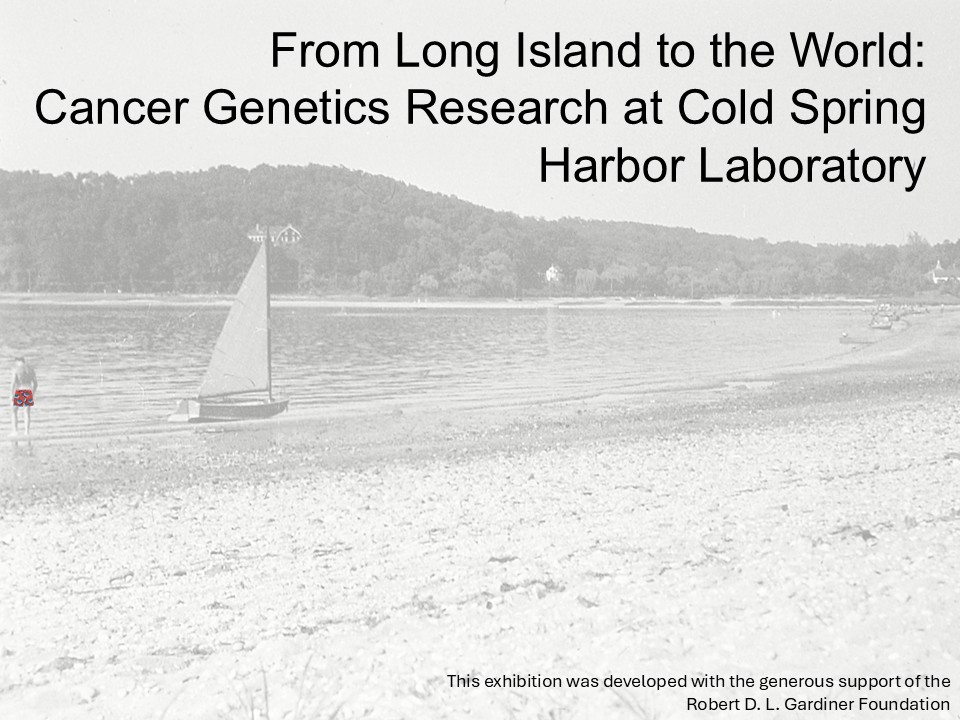
Cancer Genetics Research on Long Island
This exhibit describes what cancer is and how it is connected to genes and genetics. Through most of the twentieth century, medical research on cancer was distinct from the developing science of genetics. It wasn’t until the last third of the century that researchers had the literal and conceptual tools to grapple with cancer on a molecular level.
The 1960s and 1970s brought important scientific breakthroughs and a massive increase in federal funding for cancer research. CSHL had always been on the cutting edge of genetic research. As cancer became a genetic and molecular problem, CSHL was poised to become the cancer research powerhouse it is today.
Our exhibition takes visitors through this story of scientific discovery and offers an overview of the problems that CSHL cancer researchers are tackling today.

The Early Days of Biotech on Long Island
This exhibition is an exploration of the history of biotechnology on Long Island, focusing on the 1980s and 1990s when the industry was taking shape.
What is biotechnology? As one of our interviewees for this project points out, the term is pretty broad. It can be used in a general way to include almost any use of microorganisms to make a product, which would include traditional fermentation technology and culturing of microorganisms to extract biological substances for medicinal or other purposes. More often, though, the term ‘biotechnology’ is used in a narrower sense to refer to the commercial use of modern gene editing technologies, the first of which were developed in the 1970s. This is how we use it in this exhibition.
Plant Science, Biotechnology, and Agriculture: A History of Science on Long Island, 1900 – 2020
With the generous support of the Gardiner Foundation, the CSHL Library and Archives has completed a significant history of science project, an exhibition entitled Plant Science, Biotechnology and Agriculture: a History of Science on Long Island, 1900-2020.
The exhibition explores the relationship between agriculture and basic scientific research and how this relationship developed on Long Island over the course of the twentieth century and into the twenty-first.
The mission of the Gardiner Foundation is to support the study of Long Island history and its connections to the national story of the United States. Our exhibition does this by way of the history of science. We tell a series of stories about geneticists and plant researchers and farmers on Long Island. These stories connect the history of Long Island to the wider world and illuminate the often neglected links between the history of agriculture and the history of science.
The exhibition is based on a wealth of archival material drawn from our own collections and from those at other institutions, including Brookhaven National Laboratory, the Long Island Horticultural Research and Extension Center and the Small Special Collections Library at the University of Virginia. (Virginia, you might ask? Sometimes, due to the vagaries of scientific careers and scientists’ choices about where they want their papers kept, archival material wanders very far afield from its place of origin.)
A physical version of the exhibition is open to visitors at the Carnegie Library at CSHL. CSHL faculty, staff and students can enter the library with their ID; visitors from outside the laboratory must make an appointment.

A Natural Bestseller
This exhibit uses primary documents to trace the story of the publication of The Double Helix-from its rejection from the Harvard University Press to the New York Times Best Seller List.
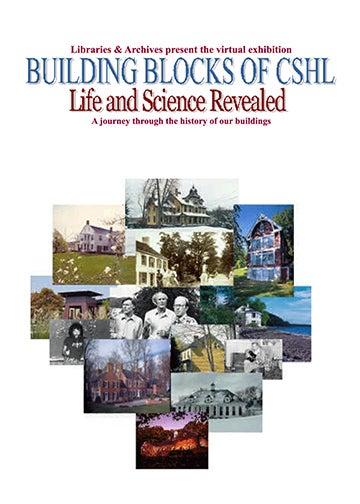
Building Blocks of CSHL
The virtual exhibit Building Blocks of CSHL features photographs, first-hand accounts, and letters documenting the significance of CSHLs Buildings.
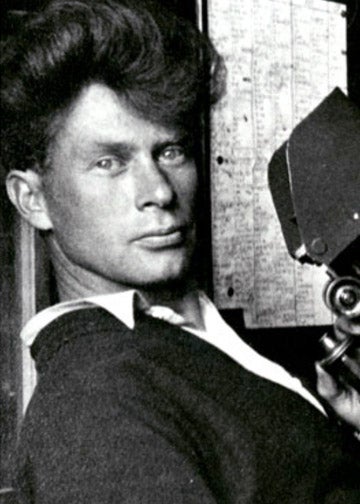
Calvin Bridges
This online exhibit is an introduction to the life and scientific contributions of Calvin Bridges. New family photos and information have been made available by the Bridges family.
<!–
Celebrating 100 Years of Genetics
One-hundred years ago, in 1904, the Carnegie Institution of Washington founded a Station for Experimental Evolution at Cold Spring Harbor. With this founding, and following the reorganization of the station in 1921 as the Carnegie Institution Department of Genetics, the world of biological research was transformed.
–>
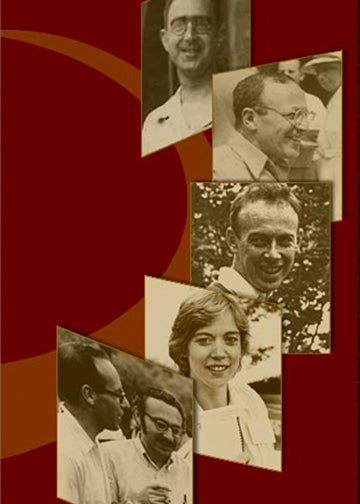

Annotated Scholarly Guide to the HGP
The guide to the HGP is a vast, online window into the Human Genome Project. It features a rich, meticulous gathering of resources, information and links to original research, articles, videos and many other materials. The scope spans not only the years bracketing the Project itself, but also the period leading to the launch and events following the Project’s completion.
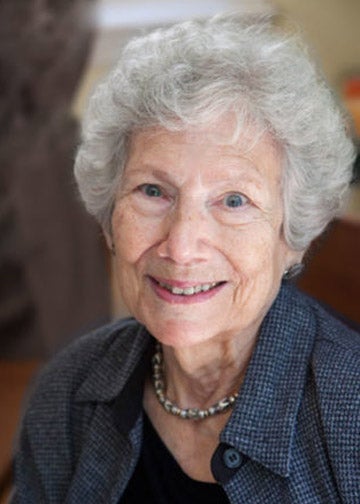
Evelyn Witkin: Science and Life
Evelyn Witkin was elected as a member of the National Academy of Sciences in 1977, at the time she was one of the few women elected to the Academy.
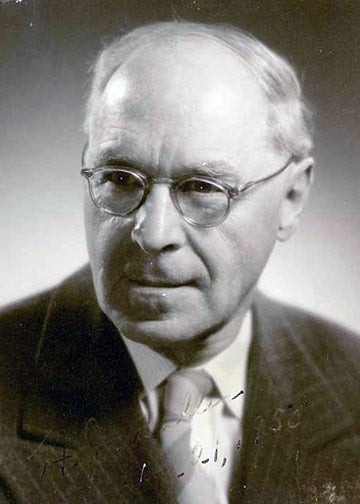
Hermann J. Muller
Hermann Joseph Muller was a pathbreaking geneticist and dedicated social activist. A cosmopolitan figure, his career was an intriguing mix of world travel, scientific discovery, and controversy. During his time, Muller was not only an internationally renowned scientist but a brave defender of his ideals. Nobel Laureate James Watson, a former student of Muller’s, has called him “the most important geneticist of the 20th century.”
<!–
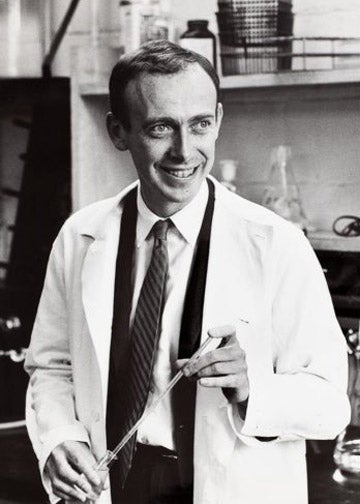
Honest Jim
Jim Watson has written eight books and published numerous essays in popular magazines. “Honest Jim” was a facetious nickname given to Watson by a a scientific colleague, but the name suits him as an author. His candid, sometimes blunt, literary style has bolstered his reputation for brash honesty.
–>

Memory Board
The Memory Board is an experiment in interactive storytelling. This site illustrates the evolving history of Cold Spring Harbor Laboratory, a center for the biological sciences, since 1890. The Memory Board provides a forum for scientists, administrators, support staff, trustees, students, and visitors to share their memories about CSHL.
Oral History
The Cold Spring Harbor Laboratory Archives has undertaken a major initiative to document the history of science through the words and images of the scientists who have worked and regularly visited here. This unique collection of oral histories provides an unprecedented perspective on the development of molecular biology, the present state of the science, and visions of the future by the leading scientists in the field.
Traveling Exhibit
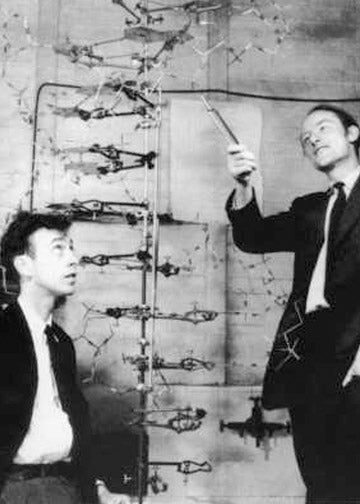
In 1953, James Watson and Francis Crick made one of the major discoveries of the twentieth century: they deciphered the double-helical structure of DNA, leading them to understand how the molecule passes information from one generation to the next. The discovery began a revolution in molecular biology that led to major advances in science and medicine.
<!–
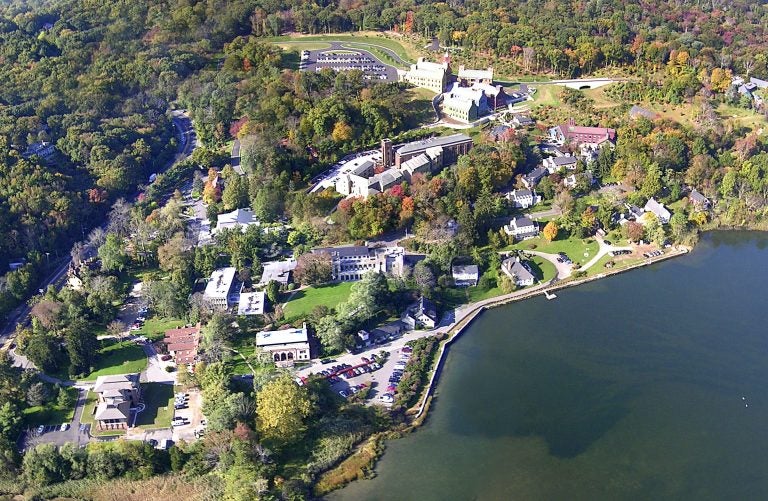
Unwinding DNA: Life at CSHL
Explore how Cold Spring Harbor’s landscape reflects the past and present study of living things.
–>